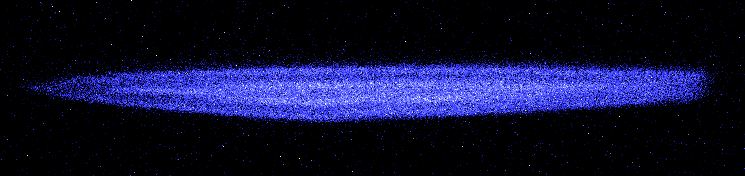


The project focuses on implementing quantum algorithms using a chain of 10 to 35 cold trapped ions, where each particle is precisely controlled across four energy levels, functioning as a qudit that effectively encodes two qubits of information. Quantum operations are mediated by a 435 nm quadrupole transition, which also serves as the foundation for implementing an optical clock, linking quantum computing with precision metrology. The setup is integrated with a cloud platform, enabling remote access and algorithmic testing, while current efforts prioritize running diverse quantum algorithms provided by a collaborating theoretical group, alongside continuous improvements to hardware and gate fidelities through the refinement of complex laser pulse sequences.
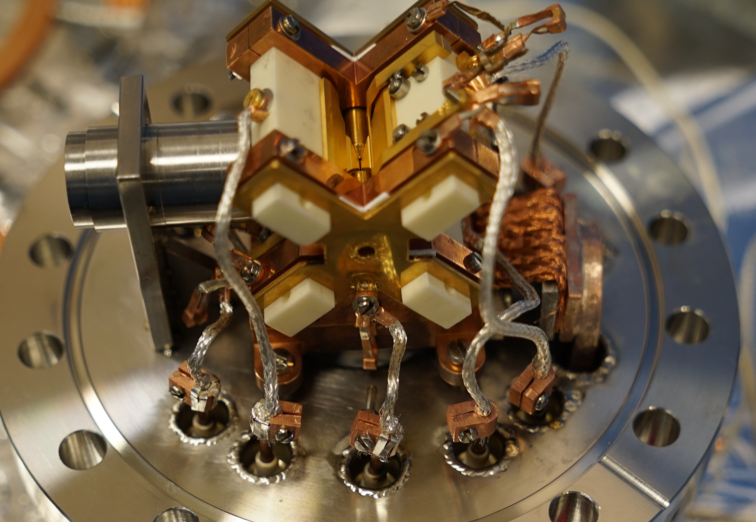
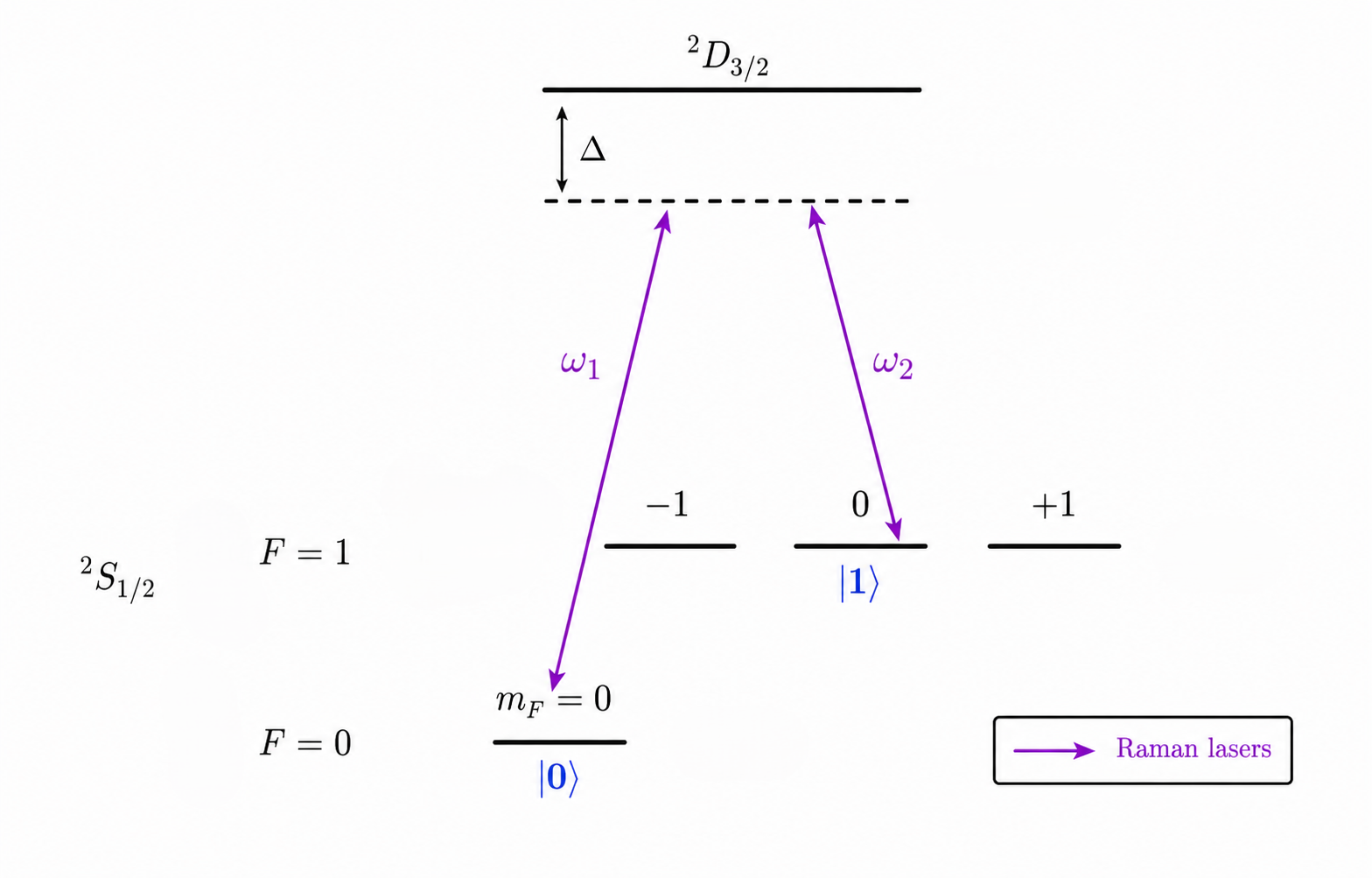
The project's primary objective is shifting from optical qubits to microwave qubits encoded in the magnetically insensitive levels of the ground-state hyperfine splitting, which is expected to dramatically enhance coherence times and improve two-qubit gate fidelities. The experimental platform focuses on testing various entangling gate implementations via Raman transitions on microwave qubits, utilizing the dipole-forbidden D state as an intermediate level to minimize decoherence. Additionally, the team is investigating schemes for the simultaneous manipulation of both optical and microwave qubits, enabling mid-circuit measurements, ancilla state utilization, improved readout, and an overall increase in quantum volume. Current technical efforts are directed toward precise control of the addressing system, which comprises two phase-locked clock lasers for achieving high-fidelity Raman transitions, upgrading the readout system with a fiber array and multichannel PMT for individual ion detection, and transitioning to the second generation of the vacuum chamber for enhanced stability and performance.
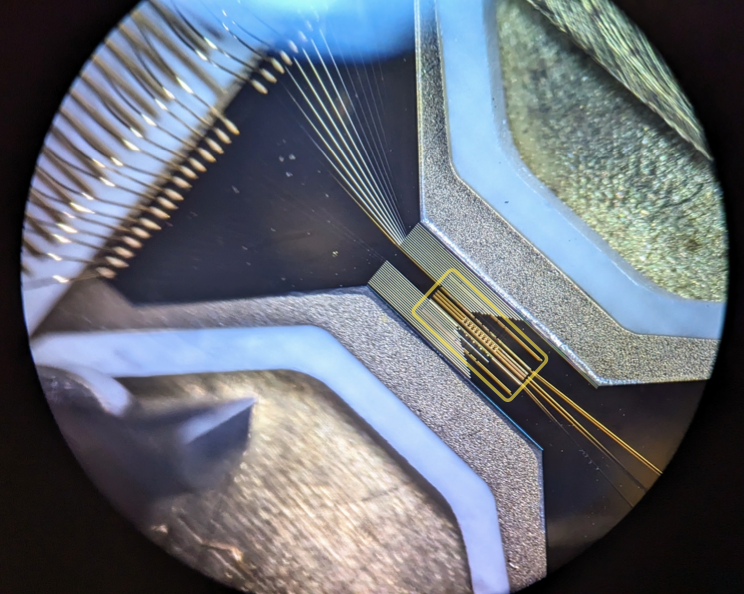
This project focuses on developing compact, room-temperature surface trap systems for quantum computing, with a particular emphasis on investigating chip performance as a function of electrode geometry and electrical parameters. A specially engineered optical system enables rapid prototyping by allowing the team to switch between different vacuum chambers within a single day. Key research activities include high-resolution spectroscopy of optical transitions, systematic testing of ion shuttling operations, and the implementation of high-fidelity two-qubit gates, all aimed at advancing the capabilities of scalable trapped-ion quantum processors.
This project is dedicated to advancing trapped-ion quantum computing by placing the surface trap inside a cryogenic environment to suppress electrical noise and achieve vanishingly low heating rates, which is expected to significantly enhance processor performance. As the setup is still in its early stages, current efforts are focused on the assembly and commissioning of the cryogenic vacuum system, the integration and alignment of laser systems, and the initial steps of ion trapping and internal state manipulation. Once operational, this platform aims to provide a low-noise environment for high-fidelity quantum operations, serving as a testbed for future large-scale quantum processors.
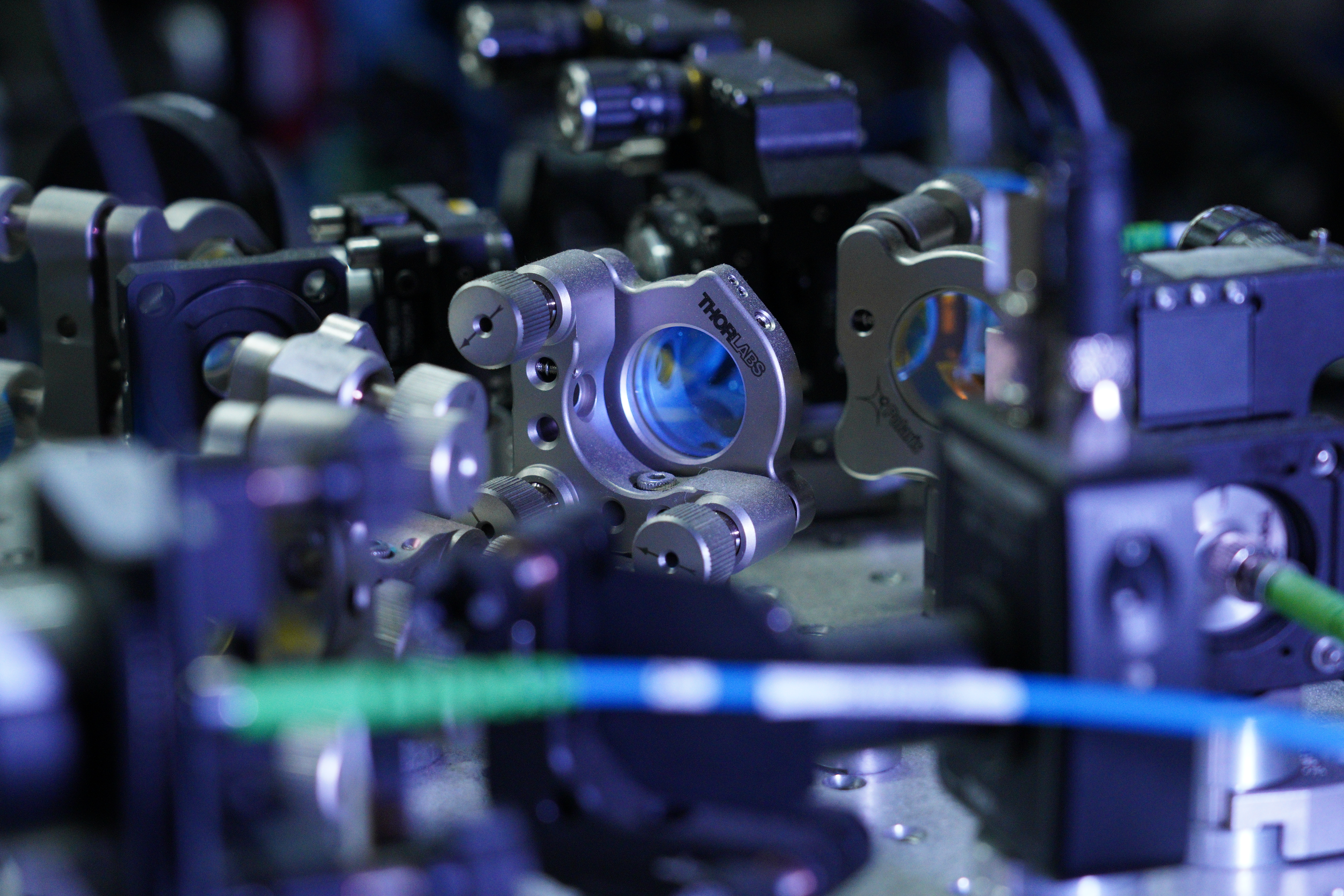
This project features a versatile ion-trapping system designed to accommodate various ion species, with its core architecture comprising both quadrupole and multipole ion traps between which ions can be shuttled. The quadrupole section is dedicated to trapping large ion crystals, while the multipole trap enables precision spectroscopy with significantly reduced inhomogeneous broadening and shifts. An additional research focus investigates the formation and behavior of YbH molecules, which arise from collisions between the ion crystal and background gas and negatively impact processor performance, alongside developing effective methods for their removal to maintain system stability.